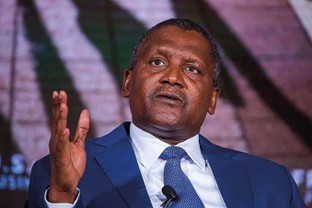
Dangote Industries Limited President Aliko Dangote has called on wealthy Nigerians to redirect their investments toward domestic projects, emphasizing that local investment remains the only viable path to sustainable national development and economic growth.
The billionaire industrialist criticized the prevalent practice of African wealth being exported and stored in foreign financial institutions, arguing that this capital flight undermines continental development prospects. His appeal comes as Nigeria seeks increased private sector participation in economic transformation.
“No nation develops without significant investments. I appeal to all wealthy Nigerians to look inward and invest here, in Nigeria, for the future of our unborn kids,” Dangote stated during a recent media interview. “There is hardly any country without corruption, but the difference is that in those other corrupt nations, they invest the stolen funds in their country.”
Dangote’s comments highlight the critical relationship between domestic investment and economic development. He emphasized that wealthy individuals in developed nations typically invest their resources locally, contributing to economic growth and job creation within their home countries.
The industrialist’s $20 billion refinery project exemplifies his commitment to domestic investment despite numerous challenges and opposition. He explained that the ambitious project aims to secure energy independence for Nigeria and serve as a catalyst for other African nations’ development.
“Apart from Algeria and Libya, which are self-sufficient, virtually every other African country is an importer,” Dangote noted, underscoring the continent’s heavy reliance on imported refined petroleum products despite abundant crude oil reserves.
His investment philosophy centers on addressing Africa’s longstanding socioeconomic challenges, particularly unemployment among the continent’s growing population. He argues that transformative projects capable of creating substantial employment opportunities are essential for sustainable development.
The refinery project demonstrates how private sector investment can address critical infrastructure gaps while generating employment and economic multiplier effects. Dangote’s investment strategy focuses on import substitution and value addition within the domestic economy.
Government data indicates that private sector contributions currently represent approximately 85 percent of Nigeria’s GDP, highlighting the sector’s crucial role in economic development. Dangote’s call for increased wealthy Nigerian investment could significantly enhance this contribution.
The industrialist’s appeal comes amid growing recognition that domestic resource mobilization is essential for Nigeria’s development objectives. Foreign investment, while valuable, cannot substitute for local capital commitment and long-term development vision.
Economic analysts support Dangote’s position, noting that domestic investment typically demonstrates greater commitment to local development and employment creation. Such investments also tend to be more resilient during global economic uncertainties.
The challenge lies in creating incentives for wealthy Nigerians to prioritize domestic investment over foreign asset accumulation. This requires policy reforms that enhance investment security, reduce bureaucratic obstacles, and provide competitive returns on domestic investments.
Dangote’s success story demonstrates that significant returns are achievable through strategic domestic investment. His diversified business empire spans cement, sugar, salt, and petroleum refining, creating thousands of jobs while generating substantial economic value.
About The Author

You may also like
-
Top 10 Real Money Online Casinos for USA joka vip room login australia Players, 2026
-
Інтим-магазин секс-іграшок LOVEZONE у Харкові пропонує товари для дорослих.
-
Reviews of the Best Online Casinos for the Year bonza spins casino 2026
-
Melbet Review Real Casino Test + Pros Cons
-
Beste Echtgeld Casinos & Spielotheken im Positiv-Probe 2026