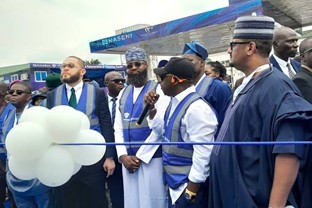
Nigeria’s compressed natural gas adoption receives significant acceleration as NASENI inaugurates its second CNG conversion center in Abuja, targeting nationwide vehicle conversion and energy cost reduction for millions of citizens.
House Speaker Tajudeen Abbas commended the National Agency of Science and Engineering Infrastructure for advancing affordable energy solutions that directly impact household budgets and transportation costs. The initiative projects 40% fuel cost savings for converted vehicles, translating to annual savings of N180,000 per vehicle owner.
The NASENI-Portland CNG Hub in Kubwa represents strategic infrastructure development designed to support Nigeria’s energy transition objectives while creating substantial economic opportunities. Similar facilities planned across all 36 states and the Federal Capital Territory could generate 150,000 direct jobs in installation, maintenance, and operations.
“Energy transitions require patient implementation but deliver transformative results for citizens’ quality of life,” Speaker Abbas noted during the commissioning ceremony. He cited successful CNG programs in Argentina, Pakistan, and Iran, where millions of vehicles operate efficiently on compressed natural gas.
Executive Vice Chairman of NASENI, Khalil Suleiman Halilu, outlined ambitious plans to convert every vehicle in Nigeria to CNG within the coming years. This comprehensive approach supports President Tinubu’s Renewed Hope Agenda for economic diversification and industrial development.
Economic analysis indicates nationwide CNG adoption could save Nigeria $8.5 billion annually in petroleum import costs while reducing transportation expenses for businesses and individuals. The environmental benefits include 30% reduction in carbon emissions from the transportation sector.
The facility provides integrated services including vehicle conversion, technician training, and refueling infrastructure. Training programs accommodate 200 participants monthly, creating certified professionals capable of supporting expanding CNG infrastructure across Nigeria.
Olu Verheijen, Special Adviser to the President on Energy, representing Chief of Staff Femi Gbajabiamila, emphasized private sector partnership importance in energy transition initiatives. The NASENI-Portland collaboration demonstrates effective public-private cooperation in delivering sustainable energy solutions.
“Government serves as a catalyst, unlocking private sector expertise and capital to deliver meaningful results for Nigerian citizens,” Verheijen stated. This model could attract additional private investment in Nigeria’s energy infrastructure development.
International examples demonstrate CNG adoption’s economic benefits, with countries achieving 60% reduction in fuel import dependency through comprehensive natural gas vehicle programs. Nigeria’s abundant natural gas reserves provide sustainable foundation for long-term CNG program success.
Implementation timelines indicate 500,000 vehicle conversions possible within 24 months, assuming adequate infrastructure development and public awareness campaigns. Government incentives, including tax reductions and conversion subsidies, support accelerated adoption rates.
The initiative aligns with Nigeria’s National Gas Expansion Program, targeting increased domestic natural gas utilization across power generation, industrial applications, and transportation sectors.
About The Author
