West African leaders face urgent pressure to industrialize and integrate their economies or risk being left behind in global economic development, according to regional summit discussions.
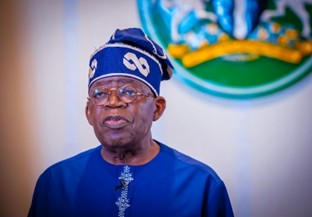
President Bola Ahmed Tinubu delivered this stark warning at the inaugural West Africa Economic Summit in Abuja, emphasizing that the region cannot afford to remain marginalized in global trade networks. Speaking as chairman of the ECOWAS Authority, Tinubu stressed that West Africa must transform its raw material wealth into manufacturing value through regional innovation and collaboration.
“Africa was left behind in previous industrial revolutions. We cannot afford to miss the next one,” Tinubu declared to over 700 summit delegates. He criticized the region’s overreliance on external trade partners, calling for collective capital mobilization and coordinated policy implementation to overcome fragmented economic approaches.
Despite a combined population exceeding 400 million and abundant natural resources, intra-regional trade in West Africa remains below 10 percent. This figure represents what Tinubu characterized as “a coordination failure” that undermines the region’s economic potential. He challenged leaders to align policies and infrastructure development to build integrated supply chains.
Digital identity emerged as a crucial enabler for regional economic integration. Engr. Abisoye Coker-Odusote, Director-General of Nigeria’s National Identity Management Commission, linked regional trade success to unified digital identity systems. Nigeria’s enrollment of over 120 million citizens under its National Identification Number system positions the country to support regional frameworks.
“A unified digital identity system is an economic and developmental imperative,” Coker-Odusote stated. “Trade in West Africa cannot flourish until citizens are digitally identifiable across borders.” She outlined a five-point roadmap for harmonizing digital identity systems across the region.
Foreign Affairs Minister Yusuf Maitama Tuggar provided historical context, noting that West Africa exported goods valued at over $166 billion in 2024, yet only 8.6 percent remained within the region. This trajectory, he argued, is unsustainable and requires fundamental orientation changes.
“Markets are a West African story,” Tuggar emphasized, recalling ancient trading networks in Katsina, Salaga, and Kano. However, he acknowledged current challenges including bureaucratic complexity, outdated customs frameworks, and insufficient embrace of the informal sector.
The summit addressed critical demographics, with more than 60 percent of West Africa’s population under 25 years old. This youthful demographic could drive transformation or become a destabilizing force if educational and employment opportunities remain inadequate.
Economic integration initiatives including the Lagos-Abidjan Highway and West African Power Pool were highlighted as essential infrastructure projects requiring coordinated regional investment and political commitment.
About The Author
