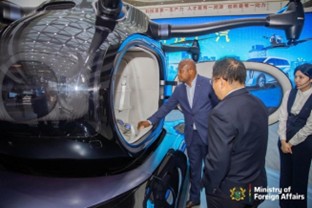
Chinese automotive manufacturer GAC is considering Ghana as a strategic location for a new electric vehicle assembly plant, following high-level discussions aimed at leveraging Ghana’s lithium potential and establishing West African manufacturing capabilities.
Foreign Affairs Minister Samuel Okudzeto Ablakwa confirmed GAC’s “favourable indication” of interest during his recent visit to China. The company views Ghana’s growing lithium reserves as a strong attraction for electric vehicle manufacturing, potentially positioning the country as a regional hub for clean energy transportation.
Discussions at GAC’s headquarters in Panyu, Guangzhou, revealed “strong interest” in exploring investment opportunities in Ghana. Minister Ablakwa described China as being “ten years ahead of the world” in electric vehicle technology, emphasizing the potential for technology transfer and knowledge sharing.
Ghana’s strategic approach involves utilizing lithium reserves to develop local industries, create employment opportunities, and reduce dependence on fossil fuel imports. This resource-to-industry transformation aligns with global trends toward sustainable transportation and clean energy adoption.
Current infrastructure assessments reveal significant development needs, with Ghana maintaining only seven EV charging stations in Accra according to joint United Nations Development Programme and Energy Commission analysis. This infrastructure gap presents both challenges and opportunities for comprehensive sector development.
Energy and Green Transition Minister John Abdulai Jinapor announced government plans to convert existing fuel stations into EV charging centres. Ongoing discussions with Chinese manufacturer BYD focus on introducing advanced charging technologies capable of recharging vehicles within five to ten minutes.
The proposed GAC assembly plant could generate thousands of jobs across mining, manufacturing, assembly, and maintenance sectors. This employment creation potential aligns with Ghana’s industrial development objectives while supporting clean energy transition goals.
The initiative forms part of broader government efforts to stimulate local industry using natural resources while supporting clean energy initiatives. This approach emphasizes value addition and local content development rather than simple resource extraction.
Technology transfer opportunities through Chinese partnership could accelerate Ghana’s industrial capabilities while building local expertise in advanced manufacturing processes. This knowledge sharing supports long-term industrial development and technological self-reliance.
Regional market access through Ghana’s strategic location could serve broader West African electric vehicle demand while establishing supply chain networks for lithium-based battery production. This regional integration approach maximizes economic benefits while supporting continental trade development.
The investment discussions reflect growing Chinese interest in African manufacturing capabilities, particularly in sectors supporting global clean energy transitions. This partnership model combines resource availability with technological expertise for mutual benefit.